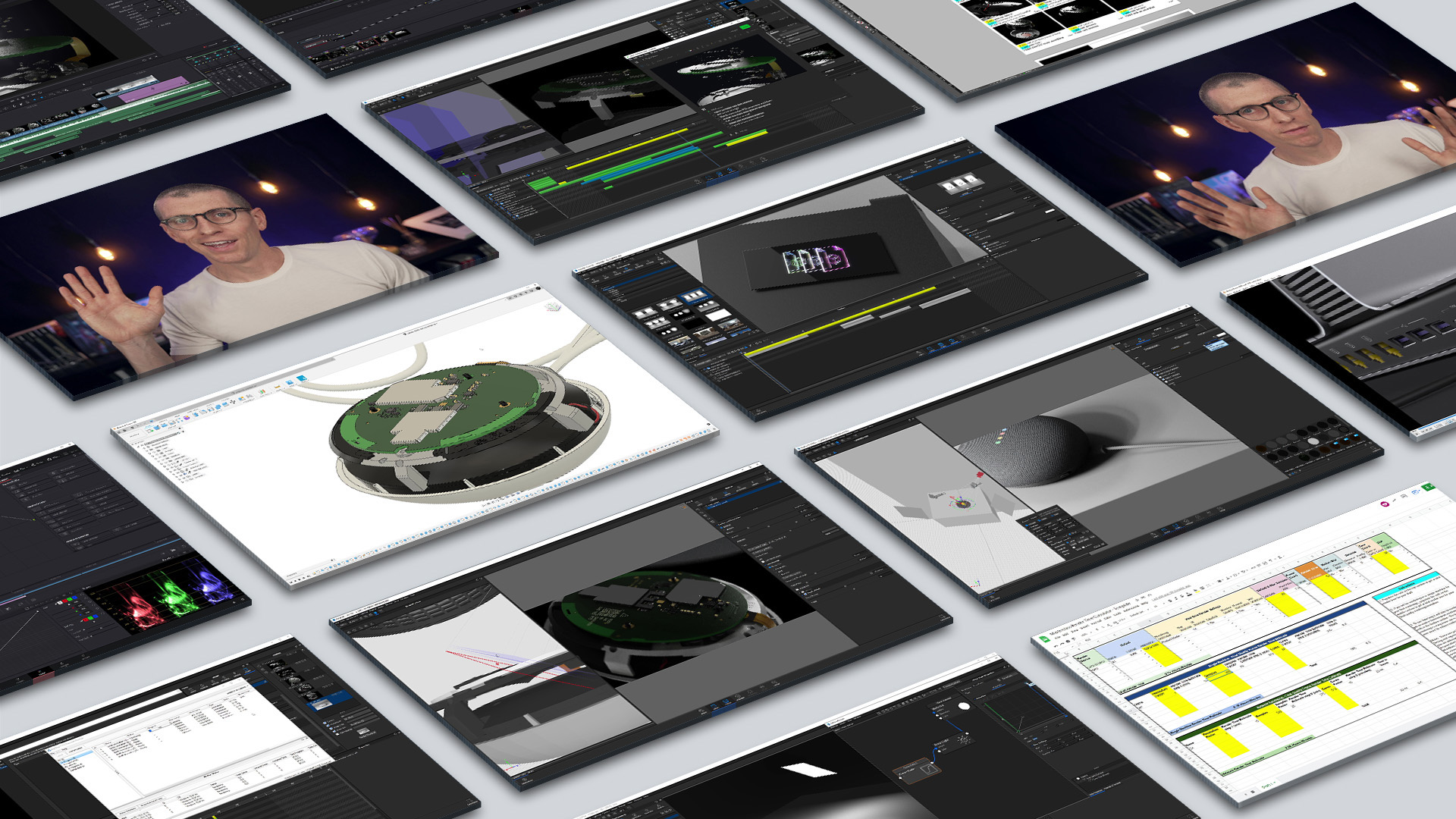
KeyShot Animation Masterclass

  • Course
  • 195 Lessons

The KeyShot Animation Masterclass is a comprehensive course all about creating professional-quality product animations.

It's Time to Level Up!

If a picture's worth a thousand words... what's a video worth?

In my experience, quite a bit. Diving into product animation has been hugely worth the investment.

Shortly after I began offering animation services to my clients, I noticed some big improvements. I began working with better clients, was able to charge more and I was creating work I actually wanted to put in my portfolio.

Of course, I had to work hard to make all this happen. But all of that change took place, because I chose to offer higher value services.

What if you could create professional-looking product animations like the one below?

Trusted by Designers From Trusted Brands

When it comes to building competency, quality learning material is key. KeyShot Masterclass customers include designers, engineers and other creatives from more than 100 companies from around the world including:

The Two Types of Product Animations

Based on my experience, there are two major categories of product animations and both can provide immense value. 

  1. Instructional Animations - These are used to demonstrate the function of a product or explain the process of how something works or how a process is performed. Whether used as instruction manuals, standard operating procedures or to explain features and benefits of a product, these animations are made for both internal and customer-facing applications.

  2. Marketing Animations - These are used to make an impression on potential customers. By blending product features and benefits with engaging visuals, the goal is often to stand out from the noise. Stop the scroll, intrigue the viewer and get them to take an action such as visiting a web page, signing up for a newsletter or buying the thing.

KeyShot is a very approachable software that prioritizes ease-of-use. And since it's very CAD-friendly and capable of producing both stylized and photo-real images, it hits that sweet spot of capable yet beginner-friendly.

You'll learn many of the skills I used to create these animations over the past few years.

Who do I think You Are? Hollywood?!

I get it. Animation can seem intimidating. 

Heck, the length of this course alone might seem intimidating. And learning a new video-editing application too?

Before you listen to that voice that tells you this is too much, consider the following: 

1. I built this course with the assumption that you have zero animation experience.

2. There's a good chance you won't ever need to make super-dramatic commercial product launch animations. This course will equip you with the basics so you will still be able to create simple internal or instructional animations. 

3. I have thousands of hours of teaching KeyShot under my belt. My super powers are making things easier to understand and breaking projects down into manageable steps.

4. If 20 hours of content sounds like too much, the feature-based lessons are less than 6 hours long. A bulk of the content comes from the time spent showing you how to build the animation at the top of this page.

The point I'm trying to make here is that if you want to learn how to make animations in KeyShot, you certainly can. And regardless of how far you intend to take your animation skills, this course will provide you with a solid base to build upon. You don't need to consume every minute of this course to extract value from it.

Here's one of the video lessons from this course showing you how to add a simple animation, edit it, make it look interesting, then paste it onto multiple parts.

How this Course Applies to You

There's a good chance you fall into one of three categories:

1. Professional, Employed - You're either a designer or engineer with 3D modeling or rendering skills and you work full-time for a company that produces products. Whether you work at a startup or a Fortune 100 company, it's critical to communicate functionality, design intent and create engaging presentations. Make your supervisor look good. Celebrate the work of your design team. Make the marketing department jealous of your animations. Maybe even get a raise or move into a full-time visualization role.

2. Full-time, Freelance - You're either a designer or a rendering specialist. Maybe you want to leave design behind and focus 100% on visualization. Either way, adding motion to your portfolio is a way to break through the noise. Instagram, TikTok and other platforms now prioritize video. Let's say you learn how to make great product animations. Congratulations, your billable rate just went up. Based on my experience, many companies are willing to spend $20K-$50K on product launch videos. Whether you're promoting your own work or someone else's, there's no denying that having animation skills will give you a leg up.

3. Student - Pretty soon, you'll be graduating and entering the work force. You'll be on the hunt for a great internship or full-time position. Sure, your concepts and design problem-solving skills are the most important. But getting the attention of a potential employer is critical. You could have the best portfolio in the world, but if you can't get someone to pause and look at your work, you'll  never get the opportunity. I even heard from a student who was not getting replies back from companies after submitting a portfolio. They took my Rendering Masterclass, re-worked all the renderings in their portfolio and re-applied to several studios and actually landed a position at a top design studio. If you can create animations, you'll stand out against your classmates as well as other job applicants.

Regardless of where you are in your career, you'll find that many principals taught in this course apply to projects you either have or will encounter. For example, wondering about how to reduce render time in KeyShot?

The lesson below shines a light on how to reduce render time by wrangling in those real-time render settings.

What You Will Learn in this Course

I went out of my way to make this course comprehensive. I don't just yadda, yadda, yadda over a bunch of the steps.

The course begins with a healthy overview so you know exactly what will and will not be covered. You can preview that course overview for free below.

Here's a succinct list of what you can expect to learn in this course: 

  • Studying reference and gathering inspiration
  • CAD model preparation for animation
  • Storyboarding and project planning
  • Part animations
  • Camera animations
  • Environment animations
  • Material animations
  • Camera techniques and transitions
  • Creating and animating lights
  • KeyShot scene organization for animations
  • Render settings for animation
  • What a non-linear editor is and why to use one
  • How to use music and sound effects
  • Where to find music and understanding licenses
  • How to use DaVinci Resolve at a basic level
  • How to use DaVinci Resolve for post production
  • How to render out and critique your own work
  • How to iterate on your KeyShot file to improve your work
  • How to iterate on your animation in DaVinci Resolve efficiently
  • How to manage long render times
  • How to use a render farm for faster render times
  • Best render settings for video from DaVinci Resolve
  • Archiving and delivery of project files
  • And lots of workflow and best practices tips!

What if You Get Stuck Along the Way?

Each video lesson has a comments section below it. If you get confused or stuck at any point, just drop a comment and I'll get back to you typically within a day. You might even find that your question has already been answered in the comments section!

Still not good enough?

Just shoot me an email. Mention that you're working through my Animation Masterclass. I'm happy to help those who've invested in my courses.

What if You Don't Like the Course?

While I have done my best to create an amazing course and describe it accurately, I understand that I can't please everybody. 

If you take the course and feel like I did not deliver on the value I promised, just email me asking for a refund. I will issue one.

To be eligible for a refund, a request must be made less than 90 days from date of purchase.

Answers to Your Questions

What version of KeyShot do I need to take this course?

KeyShot Pro at a minimum. I recommend KeyShot 10 or newer in order to be able to follow along with all the features I show. If you have KeyShot 11, you’ll be able to open all project files included. If you have an older version of KeyShot that is not KeyShot Pro, such as KeyShot for Zbrush or KeyShot for other CAD tools you should NOT purchase this course.

How long will I have access to the course for?

As long as it’s online (at least the next couple of years).

Do I need a powerful computer to do animation?

Of course it helps, but there are no minimum requirements for KeyShot Animation. I spend quite a bit of time sharing how to optimize render times, how to use a render farm and other approaches to creating animations with a lower-powered machine.

Do I need a background in film or photography to take this course?

Absolutely not. There are chapters on how to make interesting animations, images, how to study great work and how to improve your own animations to create strong work.

How much experience do I need to have to take the Animation Masterclass?

The Animation Masterclass is pretty much a sequel to the KeyShot Rendering Masterclass. It’s okay if you have ZERO experience with animation, but you should have basic to intermediate knowledge of KeyShot. Material creation, textures, lighting, HDRI editor, cameras, studios, colors and libraries will not be covered in the KeyShot Animation Masterclass.

What software is used or needed besides KeyShot?

I use a few free tools throughout this course that you will be able to download and use for free. DaVinci Resolve is used quite extensively for post-production of the content rendered out of KeyShot. You can use Premiere Pro, After Effects, Final Cut or any other editing software you’d like.

Will I have to purchase DaVinci Resolve to follow along with the KeyShot Animation Masterclass?

You do not. There is a paid ‘Studio’ version of DaVinci Resolve that I will be using. I highly recommend it and with it you’ll gain access to some useful features. However, it’s not required that you have the paid version of this software in order to follow along with the Animation Masterclass.

Can I download the video lessons?

Unfortunately, not at this time. This is a platform limitation.

Can our studio/department share the course?

I can’t stop you… but it’s meant to be purchased for a single user. I offer discounts on corporate/bulk purchases, so shoot me an email if you’re interested.

Can I get a receipt or invoice to expense or claim this purchase on my taxes?

Yes, I have instructions on how to do that included in the files/downloads section of this course.

How long is the course?

All the videos total to about 19.5 hours. 5h 49m of feature-based lessons and 13h 44m of project-based lessons.

Is there a payment plan for those who can't afford the one-time price?

There is not a payment plan for my courses at this time. I have priced the course as low as I can without devaluing the content too much. I understand it may be too expensive for many. I give away a lot of free content on my website, YouTube channel, email newsletter and answering emails and DMs. If this course is too expensive for you now, I recommend you consume my free and cheaper content to help you improve your earning power. My course will be here when you are ready. 

Do you have any student discounts?

There are no discounts for students. Everyone in this course is a student. This is a massive course and it costs significantly less than formal education courses and course materials. If you're serious about building skills as a student, think of this as an alternative to taking another course at your college. 

Contents

Miscellaneous Resources

KeyShotFarms Render Farm Discount!
Downlaoding an Invoice.mov

Downloadable Project Files

Project Files Complete.zip
Google Home Mini Assembly.step
Google Home Mini Materialized - KS10.ksp
Google_Device_Fabric_DISP.png
Magic box - KS11.bip
Magic Box.step
Video Maps.zip
WGD Blank Storyboard Template.indd
WGD Blank Storyboard Template.pdf
Render Time Calculator

Course Introduction

Here's what to expect in the KeyShot Animation Masterclass.
C0L0 - Course Introduction.mov
C0L1 - Course Overview.m4v
Preview

Chapter 1 - Animation Foundation

In this chapter, I share some big picture ideas and get you warmed up to thinking like an animator. 
C1L0 - Chapter Introduction.mov
C1L1 - Animation Foundations.m4v
C1L2 - Creating Visual Interest.mov
C1L3 - Studying Product Videos.mov
Homework & Resources

Chapter 2 - CAD Preparation

In this chapter, I'll share with you what I do in order to prepare my 3D models for animation and other details to consider.
C2L0 -Chapter Introduction.mov
C2L1 -3D Model Detail.mov
C2L2 -3D Model Color and Names.mov
C2L3 -3D Model Assembly Structure.mov
C2L4 -3D Model Local vs Global.mov
C2L5 - Lights and Set Dressing.mov
C2L6 - Exporting CAD for KeyShot.mov
Preview

Chapter 3 - PBL1 - Storyboarding and Planning

In this chapter, we'll begin planning our animation and create a storyboard.
C3PBL1 - L0 - Chapter Introduction.mov
C3PBL1 - L1 - KeyShot UI and Preferences.mov
C3PBL1 - L2 - File Management Best Practices.mov
C3PBL1 - L3 - Animation Sequences.mov
C3PBL1 - L4 - CPU vs GPU Rendering.mov
C3PBL1 - L5 - KeyShot Scene Setup.mov
C3PBL1 - L6 - Storyboarding in KeyShot.mov
C3PBL1 - L7 - Assembling the Storyboard.mov
C3PBL1 - L8 - Storyboard Markup and Review.mov
Homework & Resources

Chapter 4 - Creating Part Animations

In this chapter, you'll learn how to create part animations in KeyShot.
C4L0 - Chapter Introduction.mov
C4L1 - Animation Timline Tools.mov
C4L2 - Turntable Animation.mov
C4L3 - Fade Animation.mov
C4L4 - Translation and Linked Animations.mov
C4L5 - Rotation Animation and Pivots.mov
C4L6 - Keyframe Animations.mov
C4L7 - Motion Easing.mov
Preview
C4L8 - Physics Simulation Animation.mov
C4L9 - Mirroring and Organization.mov
C4L10 - Local vs Global Animation.mov
Homework & Resources

Chapter 5 - Camera Animations

In this chapter, I'll show you how to create camera animations in KeyShot.
C5L0 - Chapter Introduction.mov
New Animation Features as of KS2025.2.mp4
C5L1 - Camera Settings.mov
C5L2 - Camera Translation.mov
C5L3 - Camera Dolly.mov
C5L4 - Camera Inclination.mov
C5L5 - Camera Panorama.mov
C5L6 - Camera Orbit.mov
C5L7 - Camera Zoom.mov
C5L8 - Camera Twist.mov
C5L9 - Camera Depth of Field.mov
C5L10 - Camera Path.mov
C5L11 - Camera Switch Event.mov
C5L12 - Camera Shake.mov
Homework & Resources

C6 - Light Animations

In this chapter, I'll take you though how to animate physical lights.
C6L0 - Chapter Introduction.mov
C6L1 - Sun and Sky Arc.mov
C6L2 - Environment Rotation.mov
C6L3 - Environment Brightness.mov
Homework & Resources

C7 - Material Animations

In this chapter, I'll take you how to animate material properties. 
C7L0 - Chapter Introduction.mov
C7L1 - Area Light Brightness.mov
Preview
C7L2 - Spotlight Brightness.mov
C7L3 - Color Fade Animation.mov
C7L4 - Animation Nodes.mov
C7L5 - Video Map Animation.mov
Homework & Resources

C8 - Camera Technique and Transitions

In this chapter, we'll look at some techniques and transitions we can use when designing how our cameras will behave throughout the animation.
C8L0 - Chapter Introduction.mov
C8L1 - Camera Techniques and Transitions.mov
Homework & Resources

Chapter 9 - PBL2 - Blocking In the Animation Sequences

In this chapter, we'll begin creating our animation by blocking in all the animation sequences as a first draft.
C9PBL2 - L0 - Chapter Introduction.mov
C9PBL2 - L1 - Storyboard Review.mov
C9PBL2 - L2 - Change Translucent to Plastic.mov
C9PBL2 - L3 - Sequence 1 pt1.mov
C9PBL2 - L4 - Sequence 1 pt2.mov
C9PBL2 - L5 - Sequence 1 pt3.mov
C9PBL2 - L6 - Sequence 2.mov
C9PBL2 - L7 - Sequence 3.mov
C9PBL2 - L8 - Sequence 4.mov
C9PBL2 - L9 - Sequence 5.mov
C9PBL2 - L10 - Sequence 6.mov
Homework & Resources

Chapter 10 - PBL3 - Render Settings for Animation

In this chapter, I'll take you through the render settings and how to optimize them for your scene to reduce render time.
C10PBL3 - L0 - Chapter Introduction.mov
C10PBL3 - L1 - CPU vs GPU Rendering.mov
C10PBL3 - L2 - Real-time Render Settings.mov
Preview
C10PBL3 - L3 - Why Render EXR Format.mov
C10PBL3 - L4 - Render Output Dialogue.mov
C10PBL3 - L5 - Render Options Dialogue.mov
C10PBL3 - L6 - Render Queue Dialogue.mov
C10PBL3 - L7 - Render Draft 1 Sequences.mov
C10PBL3 - L8 - Handling 32-bit Files.mov
C10PBL3 - L9 - Render Time Calculator.mov
Homework & Resources

Chapter 11 - Intro to Non-Linear-Editing Software

In this chapter, I'll run you through what an NLE is, why you should use one and the role it will play in creating our animation. 
C11 - L0 - Chapter Introduction.mov
C11 - L1 - Non-Linear Editing Software.mov
C11 - L2 - Which NLE You Should Use.mov
Preview
C11 - L3 - Prepare Sequences for NLE.mov
Homework & Resources

Chapter 12 - Music and Sound Effects

In this chapter, we'll discuss and learn about how to integrate sound into our animations to create a bigger impact. 
C12 - L0 - Chapter Introduction.mov
C12 - L1 - Importance of Sound Design.mov
C12 - L2 - Understanding Music Licenses.mov
C12 - L3 - Sourcing Audio Files.mov
C12 - L4 - Choose the Right Audio.mov
Homework & Resources

Chapter 13 - PBL4 - Introduction to DaVinci Resolve

In this chapter, I'll teach you the basics of DaVinci Resolve, which will be used to do all our post production on the animation.
C13PBL4 - L0 - Chapter Introduction.mov
C13PBL4 - L1 - Paid vs Free DaVinci Resolve.mov
C13PBL4 - L2 - DaVinci Resolve Project Settings.mov
C13PBL4 - L3 - Importing to Resolve.mov
C13PBL4 - L4 - Add Sequences to Resolve Timeline.mov
Preview
C13PBL4 - L5 - Smooth Playback in Resolve.mov
C13PBL4 - L6 - Basic Editing in Resolve.mov
C13PBL4 - L7 - Exporting Video from Resolve.mov
Homework & Resources

Chapter 14 - Basic Post Production in DaVinci Resolve

In this chapter, I'll walk you through doing some basic post production editing in DaVinci Resolve.
C14 - L0 - Chapter Introduction.mov
C14 - L1 - DaVinci Resolve Manual.mov
C14 - L2 - Background Color in Resolve.mov
C14 - L3 - Keyframes in Resolve.mov
C14 - L4 - Adding Text in Resolve.mov
C14 - L5 - Adding Effects in Resolve.mov
C14 - L6 - Basic Color Correction in resolve.mov
C14 - L7 - DaVinci Resolve Motion Blur.mov
C14 - L8 - Animated Backgrounds in Resolve.mov
C14 - L9 - Music and Sound FX in Resolve.mov
Homework & Resources

Chapter 15 - PBL5 - Finish and Critique Draft 1

In this chapter, we finish up draft 1 of the animation, render it out and give ourselves a critique to figure out what needs to be improved. 
C15PBL5 - L0 - Chapter Introduction.mov
C15PBL5 - L1 - Audio Block-in.mov
C15PBL5 - L2 - Adjust Sequence Duration.mov
C15PBL5 - L3 - Draft 1 Review & Critique.mov
Homework & Resources

Chapter 16 - PBL6 - Refining Your Animation in KeyShot

In this chapter, we jump back into KeyShot and make revisions to the scene and prepare to render out draft number two.
C16PBL6 - L0 - Chapter Introduction.mov
C16PBL6 - L1 - Camera Target Bug.mov
C16PBL6 - L2 - Update Sequence 1.mov
C16PBL6 - L3 - Update Sequence 2.mov
C16PBL6 - L4 - Update Sequence 3.mov
C16PBL6 - L5 - Update Sequence 4.mov
C16PBL6 - L6 - Update Sequence 5.mov
C16PBL6 - L7 - Update Sequence 6.mov
C16PBL6 - L8 - Render Draft 2 Frames.mov
Homework & Reference

Chapter 17 - PBL7 - Introduction to Network Rendering

In this chapter, I'll take you through the process I use to render with KeyShot Network Rendering.
C17PBL7 - L0 - Chapter Introduction.mov
C17PBL7 - L1 - Intro to Network Rendering.mov
C17PBL7 - L2 - How to Use Network Rendering.mov
C17PBL7 - L3 - Network Rendering Results.mov
Homework & Resources

Chapter 18 - PBL8 - Updating Your Animation in DaVinci Resolve

In this chapter, I take you through the process of replacing the draft 1 frames with draft 2 frames in DaVinci Resolve.
C18PBL8 - L0 - Chapter Introduction.mov
C18PBL8 - L1 - Import Draft 2 Sequences.mov
C18PBL8 - L2 - Add Draft 2 Sequences to Timeline.mov
C18PBL8 - L3 - Draft 2 Color Correction.mov
C18PBL8 - L4 - Draft 2 Animated Backgrounds.mov
C18PBL8 - L5 - Draft 2 Motion Blur.mov
C18PBL8 - L6 - Draft 2 Audio Refinement.mov
C18PBL8 - L7 - Draft 2 Lens Blur.mov
C18PBL8 - L8 - Additional Effects.mov
C18PBL8 - L9 - Draft 2 Render and Review.mov
Homework & Resources

Chapter 19 - PBL9 - Final Updates in KeyShot for Draft 3

In this chapter, we'll hop back into KeyShot to make the final round of changes to the sequences before rendering them out at final quality. 
C19PBL9 - L0 - Chapter Introduction.mov
C19PBL9 - L1 - Re-time Part Animations.mov
C19PBL9 - L2 - Adjust Lighting.mov
C19PBL9 - L3 - Adjust Material Properties.mov
C19PBL9 - L4 - Adjust Camera Positions.mov
C19PBL9 - L5 - Fixing a BIG Mistake.mov
C19PBL9 - L6 - Calculate Final Frame Samples.mov
C19PBL9 - L7 - Render Farm Calculations.mov
C19PBL9 - L8 - Displacing Fabric.mov
C19PBL9 - L9 - Queue Final Sequences.mov
Homework & Resources

Chapter 20 - PBL10 - Using a Render Farm

In this chapter, I show how I use a render farm to help me render larger jobs more quickly.
C20PBL10 - L0 - Chapter Introduction.mov
C20PBL10 - L1 - Introdution to KeyShot Farms.mov
C20PBL10 - L2 - How to Use a Render Farm.mov
C20PBL10 - L3 - Render Farm Results.mov
Homework & Resources

Chapter 21 - PBL11 - Final Draft Rendering and Post Production

In this chapter, I will guide you though the process of rendering out the third and final draft of our KeyShot sequences and post production in DaVinci Resolve.
C21PBL11 - L0 - Chapter Introduction.mov
C21PBL11 - L1 - Final Draft Sequence Placement.mov
C21PBL11 - L2 - Final Draft Color Correction.mov
C21PBL11 - L3 - Final Draft Denoise.mov
C21PBL11 - L4 - Final Draft Effects.mov
C21PBL11 - L5 - Final Draft Film Grain.mov
C21PBL11 - L6 - Final Draft Audio.mov
C21PBL11 - L7 - Maximum Quality Render Settings.mov
C21PBL11 - L8 - Final Draft Encode to MP4.mov
Homework & Resources

Chapter 22 - PBL12 - Archive and Delivery

In this chapter, I show you how I archive all my project files for safe keeping and we wrap up the project. 
C22PBL12 - L0 - Chapter Introduction.mov
C22PBL12 - L1 - Archive KeyShot File.mov
C22PBL12 - L2 - DaVinci Resolve Archive.mov
C22PBL12 - L3 - Deleting Extra Project Files.mov
C22PBL12 - L4 - Parting Thoughts.mov
Homework & Resources